
Why Are My Knees So Stiff in the Morning? If getting out of bed feels harder than it used to, you’re probably familiar with that uncomfortable sensation of knees that seem reluctant to bend or straighten.
Perhaps your first few steps feel awkward. Maybe your knees ache when you stand, or you need a few minutes of gentle movement before walking comfortably.
For many adults, especially those over 45, morning knee stiffness can become a frustrating part of everyday life.
But here’s something worth understanding: waking up with stiff knees doesn’t automatically mean you’re developing arthritis or that joint discomfort is an unavoidable part of aging.
There are several possible explanations, ranging from prolonged inactivity to medical conditions that require professional attention.
In this guide, we’ll explore nine common causes, practical morning habits, exercises that may improve mobility, and what to consider when researching joint-support supplements such as Joint Genesis.
Affiliate Disclosure: This article contains paid affiliate links. We may earn a commission if you purchase through these links, at no additional cost to you. Product recommendations are separate from our educational medical information.

Why Are My Knees So Stiff in the Morning?
Why Are My Knees So Stiff in the Morning? One common reason is that your joints have remained relatively still during several hours of sleep.
Your knees contain cartilage, ligaments, tendons, muscles, and synovial fluid. These structures work together to allow comfortable movement and support your body weight.
While you’re sleeping, your knees generally experience less movement than they do during the day.
If you already have an underlying joint condition, this period of inactivity may make stiffness more noticeable when you wake up.
For example, someone with knee osteoarthritis may find that bending their knees feels difficult initially but becomes easier after several minutes of comfortable movement.
However, prolonged stiffness, significant swelling, and severe pain can suggest other conditions.
Understanding how long your symptoms last and whether they improve with movement can help identify what might be happening.
The important thing is not to assume that every stiff knee has the same cause.
9 Common Causes of Morning Knee Stiffness
If you regularly wonder, Why Are My Knees So Stiff in the Morning?, consider these nine possible explanations.
1. Knee Osteoarthritis
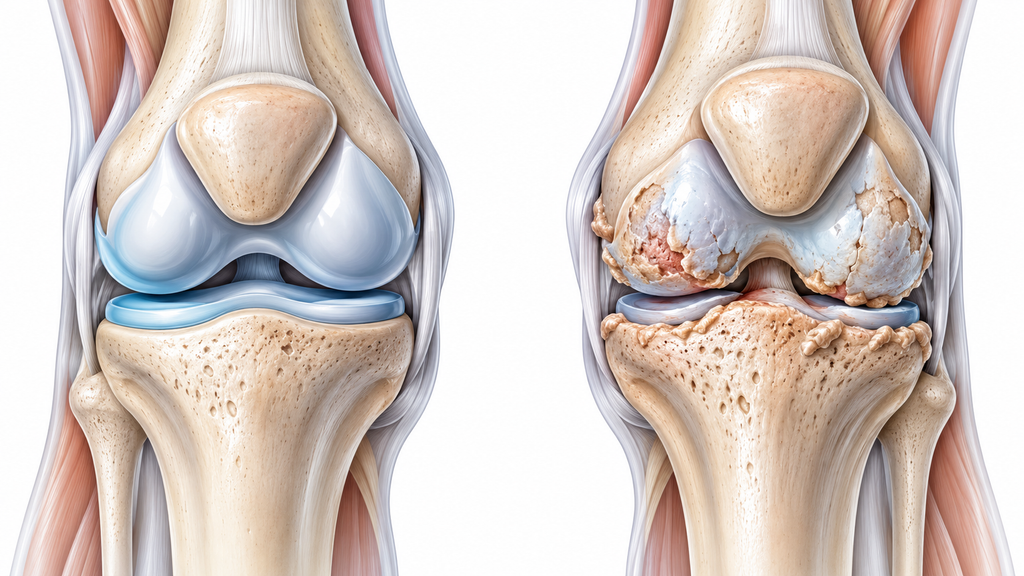
Osteoarthritis is a common cause of knee discomfort among middle-aged and older adults.
It involves changes affecting cartilage, bone, and other structures within the joint.
People with knee osteoarthritis may experience stiffness after sleeping, discomfort while climbing stairs, and pain when standing after sitting.
One characteristic pattern is morning stiffness that settles relatively quickly, often within 30 minutes.
Other symptoms may include grinding sensations, reduced flexibility, and occasional swelling.
If your question is Why Are My Knees So Stiff in the Morning?, osteoarthritis is worth considering, particularly when symptoms gradually develop over months or years.
A healthcare professional can determine whether this diagnosis fits your symptoms.
2. Rheumatoid Arthritis
Rheumatoid arthritis is an autoimmune inflammatory condition.
Unlike osteoarthritis, it involves the immune system mistakenly attacking tissues lining the joints.
Morning stiffness associated with rheumatoid arthritis frequently lasts longer than 30 minutes and may continue for an hour or more.
Other symptoms can include swollen joints, fatigue, warmth, and discomfort affecting multiple joints.
Both knees may be involved, although symptoms can vary.
If you’ve been asking Why Are My Knees So Stiff in the Morning? and your stiffness remains severe long after getting out of bed, medical evaluation is important.
Early diagnosis and treatment can help control inflammation and protect joint function.
3. Prolonged Inactivity During Sleep
Most adults sleep for several hours without making substantial movements.
Reduced movement may make certain joints feel temporarily less flexible, especially when an existing musculoskeletal problem is present.
Some people notice stiffness after sleeping in a position that keeps their knees bent.
Others experience similar discomfort after long periods of sitting.
If you’re thinking, Why Are My Knees So Stiff in the Morning?, consider whether the symptoms settle after gentle movement.
Brief discomfort can sometimes respond to simple changes in activity, but recurring symptoms still deserve attention.
4. Weak Thigh and Hip Muscles
Your quadriceps, hamstrings, and hip muscles help control knee movement.
When these muscles lack sufficient strength, everyday activities may feel more demanding.
Getting out of bed, standing from a chair, or walking downstairs may become uncomfortable.
Muscle weakness can develop after injury, extended inactivity, or reduced physical exercise.
Fortunately, appropriately prescribed strengthening exercises can often improve mobility and physical function.
A physical therapist can help identify muscular weakness and develop a suitable training program.
5. Previous Knee Injuries
Have you injured your knee during sports, a fall, or another accident?
Previous knee injuries can sometimes contribute to recurring discomfort.
Ligament injuries, meniscus damage, and fractures may alter how the knee functions.
Some significant injuries also increase the risk of developing osteoarthritis later in life.
If you keep wondering, Why Are My Knees So Stiff in the Morning?, your injury history could provide an important clue.
Persistent swelling, instability, or difficulty fully extending your knee should be assessed professionally.
6. Meniscus Degeneration
Your knees contain two menisci, which are structures that help distribute forces across the joint.
Over time, degenerative changes may develop in these tissues.
Some changes cause no symptoms, while others can be associated with pain, swelling, or restricted movement.
You might experience discomfort along the inner or outer knee, particularly during twisting or deep bending.
However, morning stiffness alone cannot establish that a meniscus problem is responsible.
A medical examination can help determine whether further investigation is necessary.
7. Tendon Irritation
Tendons connect muscles to bones and help transfer forces during movement.
Repeated loading, sudden increases in physical activity, or injury may contribute to tendon-related discomfort.
For example, patellar tendinopathy can cause pain near the front of the knee.
People with tendon irritation may notice discomfort during their first movements after resting.
Management commonly involves appropriate activity modification and progressive rehabilitation.
Avoid assuming complete rest is always the best solution.
8. Excess Body Weight
Your knees experience considerable mechanical loading during walking, climbing stairs, and standing.
For people who are overweight and have knee osteoarthritis, appropriate weight management can sometimes improve symptoms and function.
This does not mean body weight is the explanation for everyone experiencing knee pain.
Joint discomfort affects people of many different body types.
If you’re asking Why Are My Knees So Stiff in the Morning?, your overall physical activity, underlying health conditions, and joint mechanics may all be relevant.
9. Other Inflammatory Conditions
Gout, psoriatic arthritis, and other inflammatory disorders may affect the knees.
These conditions can sometimes cause significant pain, swelling, warmth, and reduced mobility.
An acutely swollen, hot knee can also indicate an infection.
If stiffness is accompanied by fever, marked redness, severe pain, or an inability to bear weight, seek urgent medical attention.
Never assume that unexplained swelling is simply an ordinary age-related problem.

Why Are My Knees So Stiff in the Morning but Better After Walking?
Have you noticed that your knees feel uncomfortable when you wake up, but the sensation gradually improves after a short walk?
This pattern can occur with stiffness following inactivity.
Movement activates the surrounding muscles and allows the joints to move through their available range.
For people with osteoarthritis, stiffness often improves relatively quickly.
However, the fact that walking helps doesn’t establish a diagnosis.
Inflammatory conditions can also improve with movement, although their stiffness may last longer.
If your recurring question is Why Are My Knees So Stiff in the Morning?, keep track of three details:
- How long the stiffness lasts.
- Whether your knees are swollen or warm.
- Whether discomfort returns later in the day.
These observations can help your healthcare professional understand the problem.
Does Morning Stiffness Mean Your Cartilage Is Damaged?
Not necessarily.
Cartilage changes can contribute to symptoms, but stiffness alone cannot reveal the condition of your cartilage.
Muscles, tendons, inflammatory processes, and other structures may also be involved.
In fact, imaging findings do not always correspond closely with the amount of discomfort a person experiences.
Avoid relying on online claims that morning stiffness always means damaged cartilage or disappearing joint fluid.
A proper evaluation provides a more reliable starting point.
The Role of Synovial Fluid in Healthy Knee Movement
When researching Why Are My Knees So Stiff in the Morning?, you may encounter the term synovial fluid.
Synovial fluid is a naturally occurring substance inside many movable joints.
It contributes to lubrication and helps cartilage surfaces move smoothly.
One important component is hyaluronic acid, also called hyaluronan.
This molecule contributes to the fluid’s physical properties.
Synovial fluid is essential for joint function, but knee stiffness cannot be reliably diagnosed as a synovial-fluid deficiency based on symptoms alone.
Some supplements are marketed around supporting healthy synovial fluid.
However, evidence involving an ingredient or a laboratory measurement doesn’t automatically prove that a finished supplement can relieve morning knee stiffness.
Explore Joint Genesis
If you’re researching nutritional products intended to support general joint comfort, Joint Genesis is one supplement you may wish to investigate.
Explore Joint Genesis Ingredients and Product Information
Paid affiliate link: We may earn a commission from qualifying purchases. Joint Genesis is not a proven treatment for arthritis or unexplained knee stiffness.
8 Practical Ways to Ease Morning Knee Stiffness
Why Are My Knees So Stiff in the Morning? Once you understand the possible causes, the next step is identifying practical strategies that fit your situation.
The following approaches may help some people manage discomfort and maintain mobility.
1. Start With Gentle Movements Before Standing
Instead of immediately jumping out of bed, try moving your legs gently.
While lying comfortably, you can slowly bend and straighten your knees within a pain-free range.
Another option is gently sliding your heels along the mattress.
These movements may help you assess how your knees feel before placing your full body weight on them.
Stop if the movement causes sharp pain.
2. Try Seated Knee Extensions
Sit upright in a stable chair with your feet resting on the floor.
Slowly straighten one leg as far as comfortably possible.
Pause briefly before lowering it.
Repeat a few times, then switch legs.
This movement activates your quadriceps and encourages controlled knee motion.
If you have a recent injury or significant swelling, seek professional advice before starting exercises.
3. Strengthen Your Legs Gradually
Strengthening the muscles around the knees can improve function for many people with osteoarthritis.
A physical therapist may recommend exercises such as supported sit-to-stands, straight-leg raises, or appropriate resistance training.
Begin at a suitable intensity.
Consistency matters more than doing an excessive number of repetitions.
Improvement may take time, so set realistic expectations.
4. Consider Gentle Warmth
Some people find that a warm shower helps them feel more comfortable when starting their day.
Gentle warmth may temporarily ease the sensation of stiffness.
Avoid excessive heat and protect your skin.
Do not apply heat to a suddenly red, hot, swollen joint that could require medical attention.
2 — Understand Your Joint-Support Options
Alongside healthy movement habits, you may want to research supplements formulated for joint wellness.
View the Joint Genesis Formula and Manufacturer Details
Paid affiliate link: We may receive a commission. Always review the product label and discuss supplements with your healthcare professional.
5. Add Comfortable Walking to Your Routine
Walking is a practical low-impact activity for many adults.
You can begin with a manageable distance and gradually increase it as your fitness allows.
Choose supportive footwear and a suitable walking surface.
If walking substantially increases pain or swelling, reduce the activity and seek advice.
6. Avoid Sitting for Extremely Long Periods
Although this article focuses on waking up, daytime inactivity also matters.
Try alternating seated activities with comfortable movement breaks.
You might stand periodically, walk around your home, or gently move your legs while sitting.
These habits can support overall mobility.
7. Maintain an Appropriate Body Weight
If you have knee osteoarthritis and are overweight, gradual weight management may help reduce discomfort.
Focus on sustainable dietary changes and physical activity appropriate for your health.
Avoid extreme diets or unproven weight-loss treatments.
Discuss individual goals with a healthcare professional.
8. Seek Appropriate Medical Treatment
Persistent stiffness may require more than lifestyle adjustments.
Depending on the diagnosis, treatment options might include physical therapy, topical anti-inflammatory medication, or other medical interventions.
For knee osteoarthritis, guidelines support individualized therapeutic exercise and appropriate use of topical NSAIDs.
These medications are not suitable for everyone.
Always check potential medication interactions and contraindications.
Why Are My Knees So Stiff in the Morning After Age 50?
Getting older changes the way your muscles, bones, and joints respond to physical demands.
Muscle strength may decrease if you become less active, while the likelihood of certain conditions such as osteoarthritis increases with age.
However, aging alone doesn’t mean you’re destined to experience severe knee pain.
Many people maintain excellent mobility through appropriate exercise and healthcare.
If your concern is Why Are My Knees So Stiff in the Morning?, review your activity habits, injury history, and any recent changes in symptoms.
A clinician can help identify the underlying cause.
Why Are My Knees So Stiff in the Morning During Menopause?
Some women report increased joint aches during perimenopause and menopause.
Hormonal changes may contribute to musculoskeletal symptoms, although their precise effects vary.
Importantly, not every knee problem occurring during menopause is caused by changing hormone levels.
Osteoarthritis, inflammatory arthritis, and other conditions still need consideration.
Seek medical advice when symptoms persist or interfere with everyday activities.
Can Diet Affect Joint Health?
A balanced diet supports overall physical health.
Adequate protein contributes to muscle maintenance, while a varied intake of fruits, vegetables, whole grains, and healthy fats provides important nutrients.
Certain eating patterns, including Mediterranean-style diets, may support broader cardiovascular and metabolic health.
However, no ordinary food or dietary supplement can be guaranteed to eliminate morning knee stiffness.
Avoid claims that one ingredient can completely rebuild cartilage or permanently reverse arthritis.
If you’re asking Why Are My Knees So Stiff in the Morning?, remember that nutrition is only one part of the broader picture.
3 — Research Joint Genesis Ingredients
Joint Genesis contains several ingredients marketed for supporting joint wellness.
If you’d like to explore the manufacturer’s formula, precautions, and product details, you can review them below.
Learn More About Joint Genesis and Its Ingredients
Paid affiliate link: Purchases may earn this website a commission. Individual benefits are not guaranteed.
What Is Joint Genesis by BioDynamix?
Joint Genesis is a dietary supplement marketed by BioDynamix for supporting joint comfort, flexibility, and mobility.
Its formulation includes an ingredient called Mobilee®, along with several complementary botanical compounds.
The manufacturer emphasizes synovial fluid and hyaluronan in its description of how the product is intended to support joint health.
For people searching Why Are My Knees So Stiff in the Morning?, such products may appear while researching additional wellness approaches.
However, Joint Genesis should not be confused with an established medical treatment for osteoarthritis, rheumatoid arthritis, or other knee disorders.
A Closer Look at Joint Genesis Ingredients
Mobilee®
Mobilee is a patented ingredient containing hyaluronic acid and other components.
It has been investigated for certain joint-related outcomes.
Nevertheless, studies involving Mobilee do not automatically establish that Joint Genesis relieves morning knee stiffness or increases knee lubrication in every user.
French Maritime Pine Bark Extract
This botanical extract contains naturally occurring polyphenols.
It has been studied for antioxidant-related properties and certain health outcomes.
Its presence in a supplement does not guarantee clinically meaningful improvement in knee symptoms.
Ginger Root
Ginger contains compounds investigated for their effects on inflammatory processes.
Some studies have explored its possible relevance to osteoarthritis symptoms.
Results remain variable, and ginger should not replace prescribed treatment.
Boswellia Serrata
Boswellia is a botanical ingredient traditionally used in several health applications.
Clinical research has explored certain extracts for joint-related symptoms.
The quality and findings of studies differ across formulations.
BioPerine®
BioPerine is a standardized black pepper extract containing piperine.
It is commonly included in supplements to influence the absorption of selected ingredients.
However, piperine may interact with certain medications, making professional advice particularly important.

Does Joint Genesis Actually Work?
That is an important question to ask before purchasing any supplement.
Joint Genesis contains ingredients associated with research into joint health.
However, individual ingredient studies are not equivalent to strong clinical evidence showing that the complete product improves morning knee stiffness.
The manufacturer markets the supplement for joint comfort and mobility, but these claims should be evaluated critically.
There is no established guarantee that taking Joint Genesis will relieve your symptoms.
The appropriate decision depends on your medical history, current medications, and the reason your knees feel stiff.
Is Joint Genesis Safe?
The fact that a supplement contains botanical ingredients does not automatically mean it is safe for everyone.
Some ingredients may cause unwanted effects or interact with medications.
People who are pregnant, breastfeeding, taking prescription medications, or managing chronic health conditions should consult their healthcare professional before using it.
Review the most recent ingredient label because product formulas can change.
4 — Check the Product Details
Before considering Joint Genesis, review the current label, serving instructions, seller terms, and refund information.
Check Joint Genesis Availability and Current Product Information
Paid affiliate link: We may receive compensation from qualifying purchases. The supplement is not intended to diagnose, treat, cure, or prevent disease.
When Should Morning Knee Stiffness Concern You?
Why Are My Knees So Stiff in the Morning? If the problem is mild and disappears quickly, it may not require emergency attention.
However, certain symptoms deserve medical evaluation.
Arrange an appointment if your stiffness lasts a long time, repeatedly limits walking, or becomes progressively worse.
Also seek assessment if you experience recurring swelling, instability, or discomfort affecting multiple joints.
Obtain urgent care if your knee suddenly becomes very swollen, hot, or red, particularly if you have a fever.
An inability to bear weight after an injury or sudden severe knee pain also requires prompt assessment.
Do not rely on supplements to manage these warning signs.
Frequently Asked Questions
1. Why Are My Knees So Stiff in the Morning but Fine Later?
Temporary stiffness after inactivity can occur with osteoarthritis and other conditions.
Movement may improve comfort, but the symptom pattern alone cannot establish the cause.
2. Why Are My Knees So Stiff in the Morning When I Am Over 60?
Osteoarthritis, previous injuries, and reduced muscle strength are possible contributors.
Age increases the likelihood of some conditions, but persistent stiffness should not be dismissed as normal aging.
3. Why Are My Knees So Stiff in the Morning Even Though I Exercise?
Being physically active doesn’t completely prevent knee problems.
Exercise intensity, injury history, inflammation, and underlying joint conditions may influence symptoms.
4. Why Are My Knees So Stiff in the Morning After Sleeping on My Side?
Sleeping position may temporarily influence discomfort, especially if an existing knee condition is present.
Persistent stiffness is not necessarily caused by your sleeping position.
5. Why Are My Knees So Stiff in the Morning Without Pain?
Some people experience restricted movement without significant pain.
Possible explanations include inactivity, reduced flexibility, or an underlying joint condition.
If the stiffness is persistent or worsening, seek an assessment.
6. Why Are My Knees So Stiff in the Morning and Swollen?
Swelling may indicate inflammation, injury, osteoarthritis, or another medical condition.
A suddenly swollen, hot, painful knee requires urgent attention, especially with fever.
7. Why Are My Knees So Stiff in the Morning for More Than an Hour?
Prolonged stiffness may suggest inflammatory arthritis or another condition needing evaluation.
A healthcare professional can assess your symptoms and determine whether additional testing is appropriate.
8. Why Are My Knees So Stiff in the Morning During Cold Weather?
Some people report greater joint discomfort during colder conditions.
However, research has not established one simple explanation that applies to everyone.
Keep warm and move comfortably, while addressing persistent underlying symptoms.
9. Can Drinking More Water Eliminate Morning Knee Stiffness?
Adequate hydration supports general health, but drinking additional water has not been shown to cure morning knee stiffness.
It is not a substitute for diagnosing or treating an underlying joint condition.
10. Can Joint Genesis Cure Arthritis?
No. There is no reliable evidence establishing that Joint Genesis cures arthritis or reverses joint damage.
It is marketed as a dietary supplement for supporting joint wellness, not as an arthritis treatment.
Final Thoughts: Take Morning Knee Stiffness Seriously
Why Are My Knees So Stiff in the Morning? The answer may involve several factors, including osteoarthritis, inflammatory conditions, muscle weakness, inactivity, or previous injuries.
The key is identifying what is actually causing your symptoms rather than assuming that every stiff knee needs the same solution.
Gentle movement, appropriately prescribed strengthening exercises, balanced nutrition, and effective medical care can all contribute to healthier joint function.
If your stiffness persists, worsens, or interferes with your daily activities, consult a healthcare professional.
For those researching optional nutritional support, Joint Genesis is one product available for further consideration.
However, it should be evaluated based on its ingredients, limitations, safety, and the evidence available for the finished product.
5 — Explore Joint Genesis
Interested in learning more about a joint-support supplement containing Mobilee and selected botanical ingredients?
Explore Joint Genesis — Formula, Pricing and Product Details
Paid affiliate link: We may earn a commission if you purchase. Consult your healthcare professional before starting supplements, particularly if you take medication or have ongoing knee symptoms.
Ultimately, understanding your symptoms and choosing evidence-based care will give you the strongest foundation for maintaining mobility and independence.
Medical Disclaimer
This article is intended for educational purposes only and is not a substitute for professional medical advice, diagnosis, or treatment. Seek advice from a qualified healthcare professional regarding persistent knee stiffness, pain, swelling, or mobility problems.
Joint Genesis is a dietary supplement, and its claims have not been evaluated by the US Food and Drug Administration. It is not intended to diagnose, treat, cure, or prevent disease.
References and Further Reading
- National Institute for Health and Care Excellence. Osteoarthritis in Over 16s: Diagnosis and Management. https://www.nice.org.uk/guidance/ng226/chapter/Recommendations
- National Health Service. Rheumatoid Arthritis Symptoms. https://www.nhs.uk/conditions/rheumatoid-arthritis/symptoms/
- National Health Service. Knee Pain. https://www.nhs.uk/symptoms/knee-pain/
- BioDynamix. Joint Genesis Product Information. https://biodynamix.co/shop/jointgenesis/
- Federal Trade Commission. Endorsement Guides and Affiliate Disclosures. https://www.ftc.gov/business-guidance/resources/ftcs-endorsement-guides-what-people-are-asking