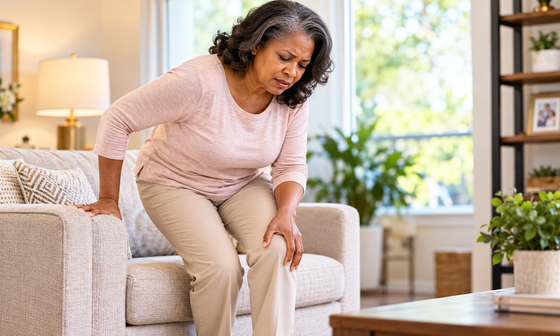
Getting older should not mean giving up the activities you love. Whether you enjoy morning walks, gardening, traveling, playing with grandchildren, or simply moving around your home comfortably, your joints play an important role in keeping you active.
Yet many adults begin noticing changes in how their bodies move as they get older.
Perhaps your knees feel stiff after sitting. Maybe your hips take longer to loosen up in the morning, or bending down feels more challenging than it once did.
If these experiences sound familiar, learning how to support joint flexibility as you age can help you make informed choices about your long-term mobility.
The encouraging news is that joint flexibility is not determined by age alone. Your activity level, muscle strength, medical conditions, and daily habits also matter.
In this guide, we’ll explore 12 practical ways to maintain comfortable movement, exercises that support mobility, nutritional considerations, and what to know about joint-support supplements such as Joint Genesis.

Why Joint Flexibility Matters as You Get Older
Joint flexibility refers to the ability of a joint to move through its available range of motion.
Your shoulders, hips, knees, ankles, wrists, and other joints work together to support everyday activities.
Healthy joint movement helps you reach overhead, climb stairs, sit comfortably, bend to pick up objects, and maintain balance.
As people get older, several changes can influence movement.
Muscle strength may decrease, physical activity patterns may change, and certain joint conditions become more common.
Some individuals also experience stiffness associated with osteoarthritis or previous injuries.
However, these changes do not affect everyone in the same way.
Understanding how to support joint flexibility as you age begins with recognizing that maintaining mobility involves more than simply stretching.
Strength, balance, cardiovascular fitness, and appropriate medical care all contribute to physical function.
What’s the Difference Between Flexibility and Mobility?
Although these terms are often used interchangeably, they describe slightly different physical abilities.
Flexibility generally refers to the ability of muscles and other soft tissues to lengthen enough to permit movement.
Mobility describes your ability to actively and comfortably move a joint through its available range while maintaining control.
For example, you might have flexible leg muscles but still struggle to stand from a chair because your thigh muscles are weak.
This distinction matters because effective joint-health routines often combine stretching with strengthening and balance exercises.
12 Practical Ways to Support Joint Flexibility as You Age
If you’re looking for realistic advice on how to support joint flexibility as you age, these habits provide a useful foundation.
1. Make Regular Movement Part of Your Day
One of the most effective ways to maintain physical function is to move consistently.
Long periods of inactivity can contribute to muscle weakness and make existing joint stiffness more noticeable.
You don’t need an expensive gym membership to become more active.
Walking around your neighborhood, gardening, dancing, and performing comfortable household activities can all contribute.
If you’ve been mostly sedentary, begin with short sessions.
Even five or ten minutes of activity can be a practical starting point.
The CDC recommends that adults work toward at least 150 minutes of moderate-intensity physical activity per week, alongside strengthening activities.
However, people who cannot meet that target should remain as active as their circumstances safely allow.
The important goal is building a sustainable movement habit.
2. Practice Gentle Stretching
Stretching can help maintain or improve the range of motion available to certain muscles and joints.
Useful options may include gentle calf stretches, hamstring stretches, shoulder movements, and hip-flexor stretches.
Move slowly and avoid bouncing.
A stretch should create a mild pulling sensation, not sharp pain.
If you’re experiencing significant joint inflammation or a recent injury, consult a healthcare professional before beginning a new stretching routine.
Learning how to support joint flexibility as you age involves choosing movements that match your current abilities rather than forcing yourself into difficult positions.
3. Strengthen the Muscles Around Your Joints
Strong muscles help control movement and support daily activities.
Your quadriceps, hamstrings, glutes, calf muscles, and core all contribute to comfortable movement.
For example, stronger thighs and hips can make standing, walking, and climbing stairs easier.
Exercises may include supported squats, seated knee extensions, resistance-band movements, and appropriately supervised strength training.
Start with manageable resistance and increase it gradually.
A physical therapist can provide an individualized program, particularly if you have arthritis or persistent pain.
4. Choose Joint-Friendly Aerobic Activities
Not all exercise needs to involve running or high-impact movements.
Many adults find walking, swimming, water aerobics, and cycling comfortable ways to maintain fitness.
Water-based exercise can be particularly appealing because buoyancy reduces some weight-bearing demands.
Stationary cycling also allows repeated knee and hip movement while providing adjustable resistance.
Choose activities that produce little or manageable discomfort and fit your preferences.
The best exercise is one you can perform safely and consistently.
Physical activity and strengthening are foundational to joint health. If you’re also researching optional nutritional supplements marketed for joint comfort, you can explore Joint Genesis by BioDynamix.
Explore Joint Genesis Ingredients and Product Information
Paid affiliate link: We may receive a commission if you purchase. Joint Genesis is not a proven treatment for arthritis or age-related joint problems.
5. Improve Your Balance
Balance becomes increasingly important as you age.
Better balance can make everyday movement safer and help reduce fall risk.
Simple balance activities may include standing near a sturdy counter while briefly shifting your weight from one leg to the other.
Tai chi is another option that combines controlled movement, balance, and body awareness.
Some older adults may benefit from supervised balance training.
If you frequently fall, experience dizziness, or have substantial balance problems, seek professional assessment before attempting exercises independently.
6. Avoid Sitting for Too Long
Many people spend several hours sitting at desks, watching television, or traveling.
Long periods of inactivity can make it harder to maintain overall physical fitness.
If you want to understand how to support joint flexibility as you age, consider incorporating comfortable movement breaks.
Stand periodically, take a short walk, or gently move your ankles and knees while seated.
There is no perfect schedule for everyone.
Choose breaks that are practical and appropriate for your physical condition.
7. Maintain a Healthy Body Weight When Appropriate
Your lower-body joints support substantial forces during everyday movement.
For people with knee or hip osteoarthritis who are overweight, appropriate weight management can help improve symptoms and physical function.
Weight management is not necessary for every person with joint discomfort.
Your medical history, body composition, nutritional needs, and overall health should guide any decision.
Avoid extreme dieting or unproven products that promise rapid changes.
8. Eat a Balanced, Nutrient-Rich Diet
Good nutrition supports muscle maintenance, bone health, and overall well-being.
Consider including a variety of vegetables, fruits, whole grains, legumes, nuts, and appropriate protein sources.
Foods such as fish, olive oil, and nuts provide healthy fats.
Adequate protein can be especially important for maintaining muscle mass as people age.
Calcium and vitamin D also contribute to normal bone health, although individual requirements vary.
No particular food has been established as a guaranteed way to restore cartilage or eliminate joint stiffness.
Think of nutrition as part of a broader healthy-aging routine.
9. Prioritize Sleep and Recovery
Sleep supports many aspects of physical and mental health.
Poor sleep can also influence how people experience discomfort and fatigue.
Try maintaining consistent sleeping and waking times.
A comfortable mattress, supportive pillows, and a relaxing bedtime routine may improve sleep quality.
If joint discomfort regularly wakes you at night, discuss it with a healthcare professional.
Repeatedly disturbed sleep deserves attention rather than being accepted as an inevitable part of aging.
Additional Joint-Wellness Options
Interested in the ingredients used in joint-support supplements? Joint Genesis contains a proprietary formula marketed for supporting mobility and joint comfort.
View the Joint Genesis Formula and Manufacturer Details
10. Use Supportive Footwear
Footwear can influence comfort, stability, and walking mechanics.
Choose shoes that fit properly and provide adequate support for your activities.
Very worn shoes or footwear that makes you feel unstable may contribute to discomfort.
Certain medical conditions may require individualized footwear recommendations.
A physical therapist or podiatrist can provide guidance if you experience persistent walking problems.
11. Learn to Recognize Joint Warning Signs
Not every sensation of stiffness indicates a serious medical problem.
However, persistent pain, repeated swelling, locking, or instability should be assessed.
Seek urgent medical care for a suddenly hot, swollen joint accompanied by fever, severe pain, or an inability to bear weight.
Understanding how to support joint flexibility as you age also means knowing when self-care is insufficient.
Early assessment can help identify conditions that require targeted treatment.
12. Build a Sustainable Routine
Consistency is more valuable than occasionally attempting an extremely demanding workout.
Choose activities you genuinely enjoy and can perform regularly.
For example, you might take a short walk in the morning, practice gentle stretching after lunch, and complete strengthening exercises on selected days.
Start with a realistic schedule.
Increase the duration or difficulty gradually as your body adapts.

A Simple 10-Minute Joint Mobility Routine for Older Adults
One practical way to apply how to support joint flexibility as you age is to create a short, comfortable daily movement routine.
The following is a general example for adults without a recent injury or medical restriction.
Minute 1–2: Gentle Walking
Begin by walking slowly around your home.
Allow your arms to swing naturally.
Start at a comfortable pace and avoid rushing.
The goal is simply to introduce movement.
Minute 3–4: Shoulder Rolls and Arm Movements
Gently roll your shoulders backward and forward.
Slowly raise and lower your arms within a comfortable range.
Avoid forcing movements that cause pinching or sharp pain.
These exercises can help maintain shoulder movement during everyday activities.
Minute 5–6: Seated Knee Extensions
Sit in a stable chair.
Slowly straighten one knee and lower your foot back to the floor.
Repeat a few times before changing legs.
This encourages controlled knee movement and activates your thigh muscles.
Minute 7–8: Ankle Circles and Heel Raises
While seated, gently move each ankle in small circles.
If comfortable, stand beside a sturdy support and perform several slow heel raises.
These movements involve the ankles and calf muscles.
Minute 9–10: Gentle Supported Stretching
Finish with a comfortable calf or hip stretch.
Hold the position briefly without bouncing.
Continue breathing normally and avoid pushing into pain.
If you have significant arthritis, recent surgery, dizziness, or mobility limitations, ask a physical therapist to adapt this routine.
Why Synovial Fluid Matters for Joint Movement
If you’re researching how to support joint flexibility as you age, you may encounter information about synovial fluid.
Synovial fluid is a naturally occurring substance found inside many movable joints.
Its functions include lubricating joint surfaces and contributing to cartilage nutrition.
Hyaluronic acid, also called hyaluronan, is one component of this fluid.
It helps give synovial fluid its characteristic properties.
However, normal joint movement depends on multiple structures, including muscles, cartilage, ligaments, tendons, and nerves.
A person’s stiffness cannot be reliably attributed to insufficient synovial fluid based on symptoms alone.
Some manufacturers use synovial fluid as a central part of their supplement marketing.
It is important to distinguish established joint physiology from claims that taking a particular supplement will significantly change joint fluid or restore lost mobility.
Joint Genesis is marketed around joint wellness and ingredients associated with synovial-fluid research.
If you’re exploring nutritional approaches, review the manufacturer’s information alongside independent evidence and safety considerations.
Learn More About Joint Genesis and Its Ingredients
What Is Joint Genesis by BioDynamix?
Joint Genesis is a dietary supplement marketed for adults interested in supporting joint comfort, flexibility, and mobility.
Its manufacturer, BioDynamix, describes a formula featuring Mobilee®, a patented ingredient containing hyaluronic acid, alongside selected botanical compounds.
The product is presented as part of a joint-wellness routine.
For readers investigating how to support joint flexibility as you age, understanding the ingredients and limitations of such supplements can support informed decisions.
However, Joint Genesis has not been established as a treatment for osteoarthritis, rheumatoid arthritis, or other joint diseases.
Mobilee® and Hyaluronic Acid
Mobilee is a patented ingredient containing hyaluronic acid and other components.
Certain studies have investigated Mobilee for joint-related outcomes.
Nevertheless, research involving an individual ingredient does not automatically prove that the finished Joint Genesis supplement improves flexibility or reduces pain.
The evidence should be evaluated according to study design, participant characteristics, dose, and clinical outcomes.
Boswellia Serrata
Boswellia is a botanical ingredient that has been investigated for certain joint-related symptoms.
Some research suggests potential benefits from particular extracts, but findings cannot necessarily be generalized to every product.
Ginger Root
Ginger contains naturally occurring compounds studied for several biological effects.
Research into its possible benefits for osteoarthritis symptoms has produced mixed or limited findings.
Ginger should not be regarded as a cure for inflammatory or degenerative joint conditions.
French Maritime Pine Bark Extract
Pine bark extracts contain polyphenols investigated for antioxidant-related properties.
Studies of individual extracts do not establish that a combined supplement will improve joint mobility.
BioPerine®
BioPerine is a standardized black pepper extract containing piperine.
It is included in various supplements because it can influence absorption of selected compounds.
Piperine may also affect certain medications, so people taking prescription drugs should consult a healthcare professional before use.

Can Joint Supplements Improve Flexibility?
This is a reasonable question for anyone interested in maintaining mobility.
Some joint-support ingredients have been investigated in clinical studies, but results vary widely.
The effectiveness of a supplement depends on its specific formulation, dose, study evidence, and the individual using it.
There is currently no sound basis for promising that Joint Genesis will restore lost cartilage, cure arthritis, or eliminate age-related stiffness.
The most strongly supported approaches for many adults with osteoarthritis include tailored therapeutic exercise, appropriate physical activity, education, and weight management when indicated.
Supplements should be viewed as optional rather than essential.
Who Should Be Cautious About Joint Supplements?
People taking anticoagulants, diabetes medications, or other prescription drugs should discuss new supplements with a qualified clinician or pharmacist.
Pregnant or breastfeeding individuals and people managing chronic medical conditions should also seek personalized advice.
Always verify the current label, ingredients, serving instructions, and safety warnings before purchasing.
CTA 4 — Check Joint Genesis Product Information
Before deciding whether any supplement belongs in your wellness routine, review its current formulation, pricing, seller terms, and potential interactions.
Check Joint Genesis Availability and Product Details
Common Mistakes That Can Make Joint Mobility Harder
Even people who understand how to support joint flexibility as you age can develop habits that undermine their progress.
One common mistake is avoiding all movement because of mild joint discomfort.
Although some conditions require temporary activity modification, prolonged inactivity can contribute to weakness and reduced physical function.
Another mistake is stretching too aggressively.
Forcing a painful joint through an extreme range of motion can aggravate symptoms.
Ignoring strength training is also unhelpful.
Stretching alone does not replace the benefits of developing the muscles that control joint movement.
Finally, relying entirely on supplements while overlooking medical assessment can delay appropriate treatment.
A balanced approach is more sensible than searching for a single solution.
How to Support Joint Flexibility as You Age After 50, 60, and 70
Your approach can evolve as your needs change.
In Your 50s
This can be an excellent time to establish sustainable activity habits.
Focus on regular walking, appropriate resistance training, and maintaining comfortable mobility.
Address recurring joint pain rather than simply ignoring it.
In Your 60s
Continue strengthening your major muscle groups.
Incorporate balance exercises alongside aerobic activity.
Adapt exercises to any existing medical conditions, but avoid assuming that being over 60 means vigorous activity is automatically inappropriate.
In Your 70s and Beyond
Prioritize activities that support independence.
These might include chair-based strengthening, walking, water exercise, tai chi, or supervised fitness programs.
Functional goals such as standing from a chair, climbing steps, and carrying groceries can help guide your training.
There is no fixed age when improving physical function becomes impossible.
An individualized exercise plan can remain valuable throughout later life.
Creating a Weekly Joint-Health Routine
Understanding how to support joint flexibility as you age is easier when you turn general advice into a practical schedule.
Here’s an example you can adapt:
| Day | Suggested activity |
|---|---|
| Monday | Comfortable walk and gentle stretching |
| Tuesday | Strengthening exercises and balance practice |
| Wednesday | Walking, swimming, or stationary cycling |
| Thursday | Gentle mobility routine |
| Friday | Strengthening exercises and a short walk |
| Saturday | Gardening, dancing, or another enjoyable activity |
| Sunday | Comfortable movement and recovery |
This is an illustrative routine, not a personalized medical prescription.
Your ideal schedule depends on your current fitness, health conditions, symptoms, and preferences.
Aim to progress toward recommended activity levels rather than attempting too much immediately.
Frequently Asked Questions
1. What Is the Best Way to Support Joint Flexibility as You Age?
A combination of regular physical activity, appropriate strengthening, gentle stretching, and balance exercises is a strong foundation.
If you have an existing joint condition, ask a healthcare professional to tailor these activities to your needs.
2. Can You Improve Joint Flexibility After 60?
Yes. Many adults can improve or maintain their range of motion and physical function through suitable exercise.
The amount of improvement depends on their health, existing joint conditions, and activity level.
3. How Long Does It Take to Improve Joint Mobility?
The timeline varies.
Some people notice changes in movement comfort relatively quickly, while meaningful strength and functional improvements often require consistent training over several weeks or months.
4. Is Walking Good for Aging Joints?
Walking is a joint-friendly aerobic activity for many adults.
It can support cardiovascular fitness and physical function.
People with severe symptoms or mobility limitations may need an adapted program.
5. Should Older Adults Stretch Every Day?
Gentle stretching can be incorporated regularly if it is comfortable and appropriate.
However, stretching is only one part of a complete physical activity program.
Strength, balance, and aerobic activity also matter.
6. Can Joint Flexibility Improve Without Supplements?
Yes. Supplements are not required to maintain or improve joint mobility.
Appropriate exercise and management of underlying conditions are often more important.
7. What Foods Help Support Healthy Joints?
A balanced dietary pattern containing vegetables, fruit, whole grains, adequate protein, and healthy fats can support overall health.
No particular food is guaranteed to repair cartilage or cure arthritis.
8. Is Joint Stiffness Normal After Age 50?
Some changes in comfort and movement become more common with age, but persistent stiffness should not automatically be regarded as normal.
Medical conditions such as osteoarthritis or inflammatory arthritis may require evaluation.
9. Does Joint Genesis Restore Cartilage?
There is no reliable evidence demonstrating that Joint Genesis restores lost cartilage or reverses arthritis-related joint damage.
Its marketing describes joint-support benefits rather than an established disease treatment.
10. Is Joint Genesis Necessary for Better Mobility?
No. Joint Genesis is an optional dietary supplement.
Improving or maintaining mobility does not depend on purchasing it.
11. How Can I Protect My Knees and Hips as I Get Older?
Maintain an appropriate activity level, strengthen supporting muscles, manage existing medical conditions, and seek professional advice for recurring pain or instability.
12. When Should I See a Doctor About Reduced Flexibility?
Seek assessment when reduced movement is persistent, worsening, painful, or interfering with daily tasks.
Sudden severe pain, substantial swelling, fever with a hot joint, or inability to bear weight requires urgent medical attention.
Final Thoughts: Staying Flexible and Active at Any Age
Learning how to support joint flexibility as you age is ultimately about building habits that help you remain active and independent.
Regular movement, muscle strengthening, gentle stretching, balanced nutrition, and appropriate medical care can all contribute to maintaining physical function.
You don’t need to pursue perfect flexibility or compare yourself with someone else’s abilities.
Instead, focus on progress that helps you enjoy your daily life.
For some people, that means climbing stairs with greater confidence.
For others, it means walking through a park, working in the garden, or enjoying activities with family.
If you’re researching additional nutritional products, Joint Genesis is one supplement you can evaluate.
However, the finished product has not been established as a cure for joint diseases or a guaranteed way to improve mobility.
Explore Joint Genesis Before Deciding
Interested in examining the manufacturer’s current formula, pricing, and purchasing information?
Explore Joint Genesis — Ingredients, Availability and Product Details
Remember that the most valuable joint-health strategy is one that is safe, evidence-based, and sustainable for your individual needs.
Medical Disclaimer
This article provides general educational information and should not be interpreted as individualized medical advice. It is not intended to diagnose, treat, or prevent any medical condition.
People with persistent joint pain, inflammation, reduced mobility, or other concerning symptoms should consult a qualified healthcare professional.
Joint Genesis is a dietary supplement, not an approved treatment for arthritis or other joint diseases.
References and Further Reading
- Centers for Disease Control and Prevention — About Physical Activity and Arthritis: https://www.cdc.gov/arthritis/prevention/index.html
- Centers for Disease Control and Prevention — Self-Care for Arthritis: https://www.cdc.gov/arthritis/caring/index.html
- National Institute for Health and Care Excellence — Osteoarthritis in Over 16s: Diagnosis and Management: https://www.nice.org.uk/guidance/ng226/chapter/recommendations
- National Institute for Health and Care Excellence — Therapeutic Exercise: https://www.nice.org.uk/guidance/qs87/chapter/quality-statement-4-therapeutic-exercise
- Federal Trade Commission — Endorsement Guides and Affiliate Disclosures: https://www.ftc.gov/business-guidance/resources/ftcs-endorsement-guides-what-people-are-asking